daily substack recs
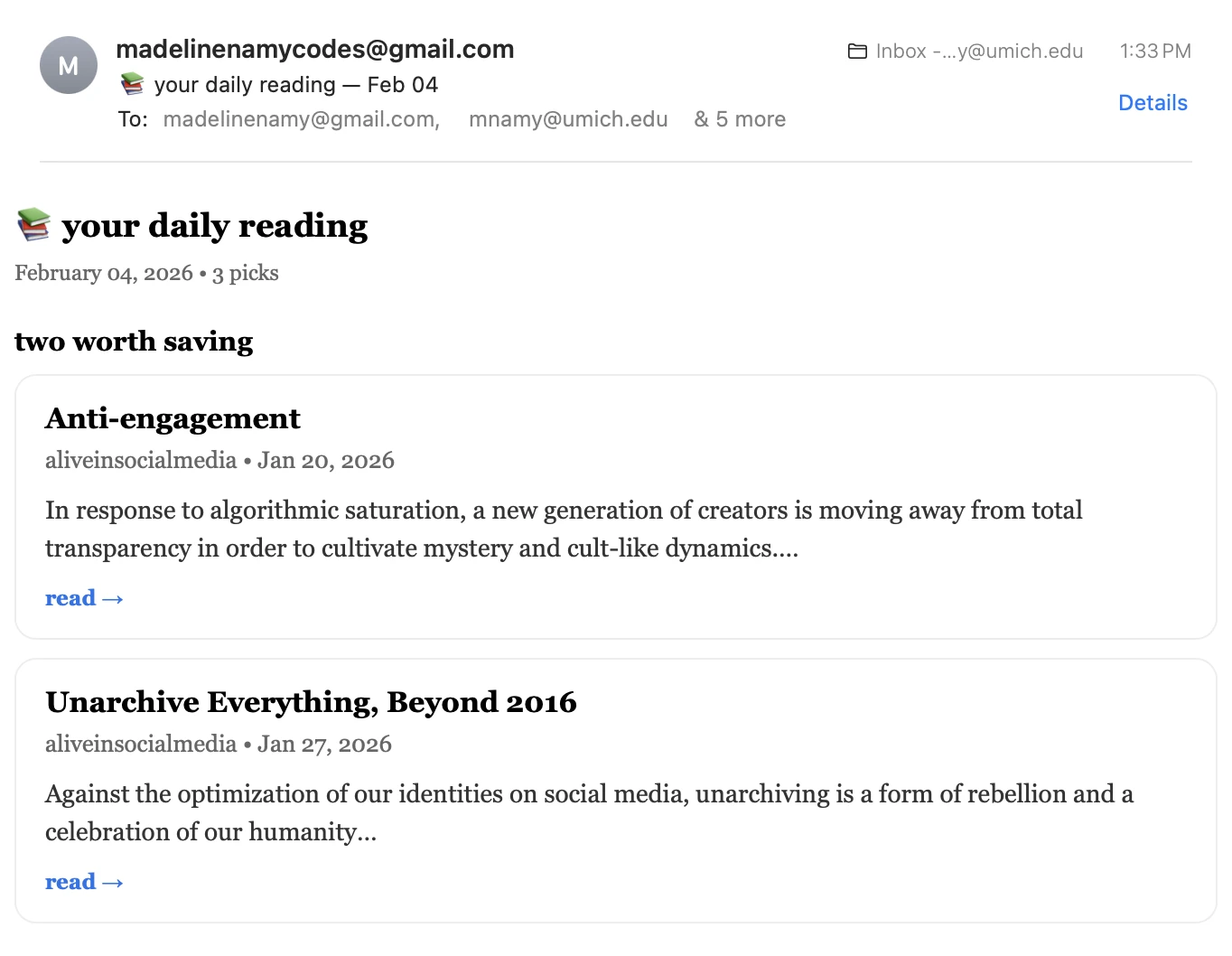
built a taste-driven discovery system that delivers a small number of high-quality essays each day, optimized for consistency and attention.
the inspiration
i love to read new things, but with the plethora of content out there, finding new articles + writers seems more tedious than enjoyable. and when i first looked at substack, the sheer amount of content immediately overwhelmed me and led me to just close the tab on my laptop.
when discussing this with friends, i learned that i wasn't the only one who felt this way about substack, inspiring me to build my own solution to this daily challenge!
substack readers interested in thoughtful long-form content lack a low-effort way to consistently discover writing that matches their taste, leading to inconsistent reading habits and reliance on misaligned algorithmic feeds.

target user
curious, digitally native readers in their 20s who:
- enjoy long-form, essay-style writing
- feel overwhelmed by content volume
- value taste and perspective over trends
- prefer low-effort discovery
- check email daily
- want reading to feel intentional, not addictive
product goal
build a simple system that helps users read more consistently by delivering one high-quality, relevant article each day with minimal friction.
success was defined as
fewer recommendations, higher confidence
reduced decision fatigue
reading that feels worth saving or revisiting
constraints + tradeoffs
the limits i designed around
because this was a one-week solo mvp, i needed to keep the system lightweight and easy to iterate on. there's no official substack recommendation api, which limited how i could discover and pull content, and i intentionally chose email as the primary delivery channel instead of building a separate interface. the goal wasn't to create the most technically complex recommendation engine, but to quickly test whether a taste-driven approach could make discovery feel more relevant and manageable.
what i prioritized
i made a few deliberate product decisions to keep the experience aligned with that goal. i prioritized curation over scale, choosing fewer recommendations with higher confidence instead of an endless feed. i used email rather than an app so the product could fit naturally into an existing daily habit, and weighted taste and writing style more heavily than popularity or recency. ultimately, i optimized for consistency over novelty: the system was designed to help someone build a sustainable reading habit, not keep them endlessly discovering new content.
these tradeoffs intentionally mirror how taste-based products like music and podcasts earn long-term trust.
solution
i built a taste-first substack discovery engine that sends a daily email with a small set of carefully chosen essays.
how it works (high-level)
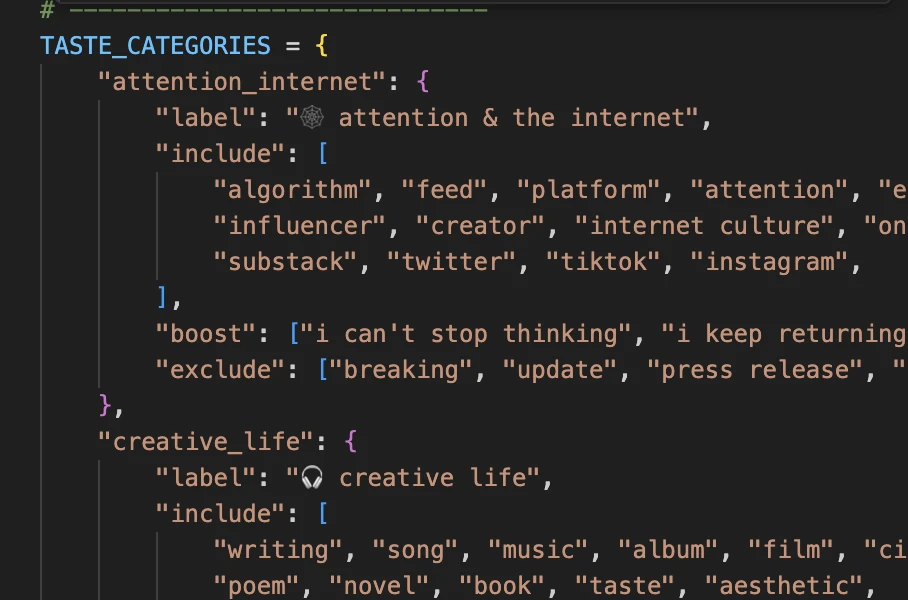
instead of ranking content by popularity or recency alone, the system uses a custom scoring model built around signals that better reflect the kind of writing i actually want to read. it looks for essay-style qualities like first-person voice, reflection, and critique, while giving more weight to trusted authors and slower-publishing newsletters.
to keep the recommendations focused, the system also penalizes noisier content like roundups, updates, listicles, and news-style posts. i added additional guardrails including a cap on articles per source, exclusion of paid-only posts, and a hard limit on the total number of daily recommendations.
digest structure (intentional by design)
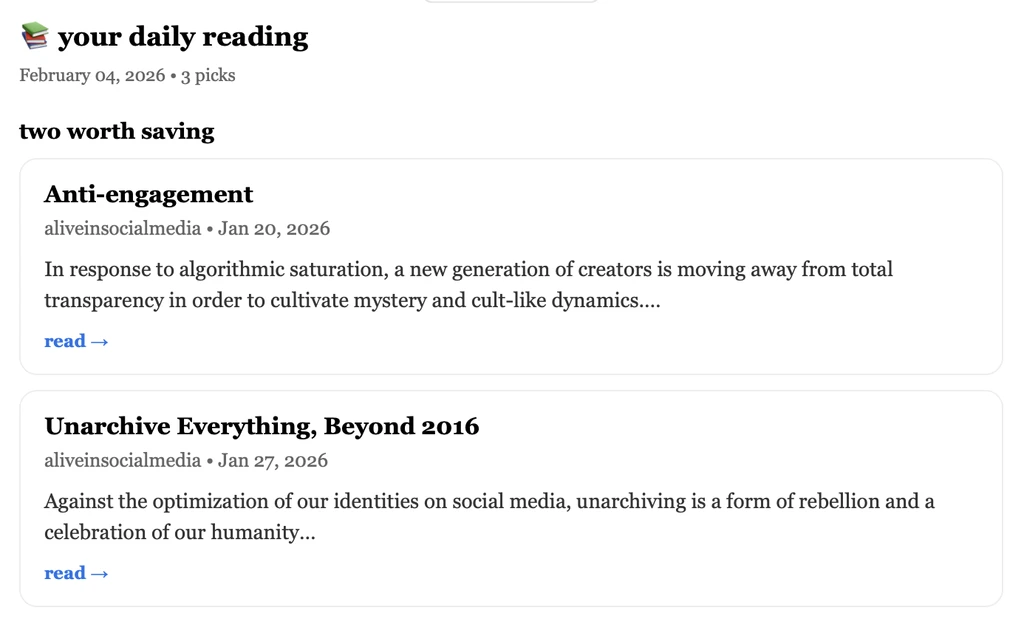
each email is structured to reduce choice overload:
one to really read
two worth saving
one wild card
voice-forward, unexpected
one familiar voice
from a trusted author
this structure encourages depth without overwhelm.
mvp scope
included
- daily email delivery
- taste-based scoring system
- author tiering (trusted writers vs discovery)
- lightweight discovery via substack recommendations
- consistent recommendation cadence
out of scope (for mvp)
- user accounts or profiles
- collaborative filtering or machine learning personalization
- mobile or web interface
- real-time engagement optimization
reflection
building this product was especially meaningful because it's something i could genuinely see myself using every day. working on a tool tied to a real habit i care about made the project both motivating and grounding.
build through ambiguity
i built this mvp end-to-end by shipping quickly, making tradeoffs without perfect information, and validating decisions against user value rather than technical complexity.
build with intention
instead of optimizing for scale or sophistication, i focused on reducing friction and designing a discovery experience that feels calm, deliberate, and human, not algorithmic.
next steps
- introducing lightweight feedback signals (save, skip, "more like this")
- validating reading consistency over time
- refining author tiers dynamically
- experimenting with cadence and timing
- exploring simple save or archive features
the goal would remain the same: help people read more, not scroll more.